Showing posts with label equine. Show all posts

Friday, 8 December 2017

Equine's December issue - have you read it yet?

Inside this issue:-


Fibre Feeds & Balancers; how to plan your horse's diet
Riding Holidays; where to go and what to pack
Managing 'The Big Freeze'; water, feed, shelter, rugs, exercise, horseboxes & competitions
Winter clothing & footwear on test

Vet Focus on Equine Dentistry
Is Liver Fluke a risk to your horse?

Read the digital edition from this link


Fabulous Christmas Gift ideas - PLUS!

  • WIN - Equisafety Hi Vis
  • WIN - Groom Away Winter Packs
  • WIN - Horseware Christmas Jumpers for all the family
  • WIN - Absorbine Miracle Groom 


Competition News, including photographs and profiles from the National Amateur Showjumping Championships, Pony Club Awards, advice on teaching your horse about water, saddlefitting help and much more ...


 A subscription to Equine is the perfect horsey gift! ... Subscribe securely to Equine now!


Thursday, 6 July 2017

Gourmet Grazing; Understand Topping and Worn Patches


Your grazing paddocks produce the most natural - and cheapest - feed for your horse, along with the essential benefit of turnout time to 'just be a horse'. In the seasonal 'Gourmet Grazing' features in every issue of Equine magazine, the experts at Logic answer reader questions providing practical advice on many different aspects of managing grazing paddocks as well as possible.

Logic Equestrian
For video and more information about managing your grazing, visit www.LogicToday.co.uk


Q - Our three horses share their daytime summer grazing of nine acres with pedigree Blue Leicester ewes and lambs, but our stocking density isn’t high, so there still is a need to top the pasture. What is the best way to manage this – should we top shorter and so less regularly, or do we leave it longer and top a little off more frequently? What is the best option for the horses and does that compromise what would be best for the sheep? The land is sloping and drains well and it’s open, North West facing, so grows fairly evenly. It’s been down to pasture for nearly 10 years now, but is still a healthy sward that is fertilised with 20:10:10 each spring.

Logic TRM120 Rotary Mower topping a paddock
Answer - Generally horses and sheep like a similar type of grazing as their eating method of nibbling and biting off grass is suited to short growth. To provide this, our recommendation would be to top quite regularly. This would be at the end of each grazing period if you are rotating grazing, but if you are not dividing up the area with electric fencing and the area is set stocked, then once a month would be appropriate. With the use of a Logic Rotary Mower you could top the whole area in a few hours; about a morning’s work. When the grass is kept to a shorter length you will find poo picking is so much easier and if you use one of our Sweeper Collectors the job will be done in a very short time. With the addition of sheep you should get less ‘soiled ‘areas as they will clear up after the horses and topping will remove seed heads to keep the new shoots short and nutritious.  Even though the pasture has been down for 10 years, regular topping will encourage the finer grasses to flourish and output from the paddock should increase.

Q - What is the best way of dealing with worn patches in grazing pastures that are used for ponies? We have several small paddocks, divided by a mix of stone walls and electric fencing and three Welsh ponies that don’t need lush grazing, especially at this time of year.
The land is very free draining, so in drier periods, it ‘wears’ in patches, which can end up with bare ground and we want to stay on top of repairing these to keep the grazing looking as good as possible. We can move the ponies around to give the paddocks a rest for a period, so how do you suggest we best repair the grass and what type of seed mix will be quick to establish, hard wearing and yet not too nutritious? Is there such a mix??

Logic LPH200 Pro-Harrow and EBC-TFS80 Electro-broadcaster
on the ATV, over-seeding this paddock.
Answer - If you have the ability to close up a grazing area as you indicate, with electric fencing or by closing the gate into the paddock with the ‘bare’ area, you should be able to carry out repair work quite easily. The choice of seed mixtures is important and advice can be taken from your local agricultural merchant or go online to source a suitable mixture from a reputable seed house. It should contain meadow fescue, timothy, creeping red fescue and smooth stalked meadow grass, which are suitable for horses and ponies. They are hard wearing and don’t provide too much protein, so should not create any issues. Often these mixtures contain ryegrasses as well which are not so suitable, but are good for growth and may be worth considering in your drier patch as they have deep root systems and would probably thrive better. You could always create your own mixture using any of the above grasses with some herbs and wild flowers as well.
The best time to over-seed in in the autumn or spring when there is enough moisture in the soil to ensure good germination. The first job however, is to check the pH of the soil and spread a liming product to correct any acidity and this would be best done in the autumn.  You can ask an agronomist to carry out this service or you can do it yourself. Simply take a small soil sample, about an egg cup full into a clean plastic bucket, from about ten equally spaced sites across the whole area and mix thoroughly with a wooden spoon, before taking it to your local agricultural merchant who will arrange to have it analysed.  Once any remedial measures have been carried out the next step is to sow the seed. You indicate the worn areas are in patches, so are probably too small to use an electro-broadcaster, in which case sowing by hand would be appropriate. You will need to create a suitable tilth for the seed to be broadcast onto and a Logic Tine Harrow is the ideal implement to run over with a few times, which will level and prepare the area. Simply spread the seed as evenly as possible then go over with the harrow a few more times to spread and cover the seed with soil. Roll the area to consolidate and level, which will ensure the seed is in contact with the soil to encourage good germination.  A Logic Ballast Roller would be perfect for this work so that the optimum weight for moisture and soil type can be provided.  
Use your electric fencing to cordon off the area, to let the seedlings become established before allowing livestock back onto the grazing. A slow release, balanced compound fertiliser should be applied to make sure the new plants have the correct nutrients to grow well and get established.

This article first appeared in the June 2017 issue of Equine magazine. To subscribe to Equine, visit the secure online store at www.theequinestore.co.uk
 

Tuesday, 27 June 2017

Talking Tactics; Walking the Cross Country Course


So you have arrived at the event, checked and watered your horse, and collected your number. Now to walk the cross country course at breakneck speed! From the May issue of Equine, Caroline Mosley (pictured) shares some practical advice from her regular 'Talking Tactics' column…

Occasionally at an event local to you, the cross country course can be walked the day before competition day, but as with most things, there are advantages and disadvantages to this!  The advantages to walking the course at a time of ‘no pressure’ are that you can spend longer reviewing approaches and working out where to save time. The disadvantage is that you spend the night before your competition day fretting over the odd jump or two! 

Whatever day I’m walking, whether it is the day before or on the day, I find taking photographs of each fence to be helpful when going back over the course later on.  I do use the Cross Country App for walking as it also maps out my minute markers and pictures of the fences are logged so you can see a map with jumps. 

At the start of the course walk, check the colour of fences you are jumping, and the number of fences.  There are often some ‘black flag’ alternatives, so have a look and check where they may be on the course as it can be easy to miss them. 
(Black flagged fences are indicated by a black line on the fence flags, it means there is an easier, alternative fence you can jump, which takes longer in time – check the rule book for further info)

At the start, check the start box, have a look at the optimum time, the number of fences and where the start box is in relation to the warm up.  Sometimes it can be miles away and other times you will be galloping past the warm up on your approach to fence 2, which can cause a horse to nap, so its good to know the layout as you can then can make a plan in advance (such as asking someone to help walk the horse over to the start box, or riding a bit wide past the warm up when on the course).

In the start box, have a look ahead at your first fence; is it close to the start or a decent gallop away?  Think about how you will start. Galloping through the start box as the starter counts down isn’t really safe, so you should always plan to be setting off at a standing start, or moving at a walk/trot.

Walking up to the first fences, look ahead for the next one, if you can’t see it, look at the rope to see the direction.  I have walked a course in beautiful parkland, but it wasn’t roped and finding the next fence was quite difficult!  I ended up walking the course twice to make sure I knew which hillock to ride towards and despite doing this, I still got ever so slightly lost heading towards the last few fences, costing me a few time faults!

When I walk between the fences I look behind me at the one I have just jumped; sometime you can see ground undulations you never saw before, and also what line you will be galloping on.  Looking ahead at the fence coming up, I assess whichever one I am jumping (is it the middle one in a line of fences for example) to make sure that, in the event a number has come off, I still know which one to jump!  Sometimes they look quite similar in size and it can be difficult.  Often in this case BE will flag off the fence you should avoid, but occasionally I have come up to a group of fences to find no number on mine (it was a corner and had been knocked off by a previous rider) and the choice of three fairly similar fences to jump! Cue panic, on fast approach! 

As you walk the course, have a think about each fence and why it has been positioned where it is.  A corner on a curve is asking for rider navigation error so think about keeping control of the shoulder and the curve you plan to ride to give you and the horse the best possible chance to jump the correct side of the flags!  A jump going into trees is likely to make a young, inexperienced horse back off and may need to be ridden more strongly on the approach to it. 

Subscribe to Equine securely online and save over 30%

Walk the course exactly where you will be riding and if you make a mistake walking it then go back and walk the line again, including from the approach of the fence before.  Safe riding is important, so walking the cross country and working out where you are going along with what approaches you will use, will improve both your own and your horse’s safety. Stop after walking a few fences and go through the course so far in your memory – I say things to myself such as:

Fence 1 – log, straight onto fence 2 - table, turn left over hill to 3ab, hanging log to skinny etc; close your eyes and imagine the fences so that you memorise them.  If there is a particular turn where I may end up the wrong side of the flags, I repeat this several times to myself - ‘fence 7 turn left, fence 7 turn left, fence 7 turn left’ so it becomes a bit of a mantra. Recently at Forgandenny, fence 7abc was a coffin complex with a left turn afterwards. The 90/100 class went to the right of the string and the my Novice class to the left.  It was so easy to go the wrong side, so I told myself this mantra for half of my walk on the way to fence 8!  I went through the course from fence 1 to fence 7 to remind myself of this, as it could have been an easy time wasting error. I’m pleased to say I went left of the string!!

Striding the distances takes practice, but knowing your stride length can be done simply at home and is useful when walking the cross country course. Does the striding mean you need more of a showjumping canter or does it mean you can push forward?  Coming from a showjumping background I find combinations much easier than single fences (oddly), although I tend to ‘show jump’ them to make sure and then have to make up my time afterwards.   

When walking the cross country, try not to get distracted. This is easily done and very annoying! Last year at Floors Castle I committed this cardinal sin and got distracted by a lovely dachshund  when walking the cross country, only to lose concentration, so I didn’t notice the swerve needed to get to fence 16.  Sailed on past it I did - and it cost us a place with a big fat ‘E’ on my horse’s record. Annoying and easily avoided! It’s a mistake I will not be repeating in a hurry!  In all my years of eventing it is the first time I have done this and it will hopefully be the last! It was positioned to be a rider error fence and I fell right into it! (not literally!)

When the fences get bigger, I tend to walk the cross country twice.  If you feel the course you are walking is ‘ginormous’, it’s often better to do a second walk.  The course never looks as bad a second time, as you can assess your lines, the ground and approaches again when you see them on a second turn.  Occasionally I have walked 3 and 4 times, but this is usually at a 3 day when we have lots of time to walk the dogs!

Just before I get on to head over to cross country, I have a quiet moment to go through the course.  I go through it in my memory then check it against my cross country app and the notes of the minute markers.  I have always written the markers on my arm too in case I forget on the course.  When going through the course in my memory I add in the minute markers. I often don’t check them at every one, but it’s good to know them so that I can check when it’s convenient.  Obviously if your minute is over a fence it would be daft to check it, but you can have a look as you gallop away to see if you are a few seconds up or down.  Be sensible with minute markers and ride the horse, not the time. 

Lastly, if you are feeling nervous in the warm up, jump the fences that you feel comfortable to jump.  Even if it’s just a single log, get the gallop going and jump it on a normal stride, longer stride, shorter stride, at an angle etc.  You don’t have to jump every fence in the warm up.  If you are jumping at the higher levels its useful to jump a couple of angles or the skinny in the warm up to make sure your communication is working. Pull up, give the horse chance to get his breath back, memorise the course again, take deep breaths and make your way to the start box for an awesome round! 

I hope you find this useful, If you are ever at an event and unsure of how to ride something, ask a fellow competitor, I’ve found most eventers are friendly and helpful and will offer their input if you ask for it.  I am also happy to help, so if you see me in orange, with my Labrador (aka Chief water-jump-depth-tester) then do ask.

Spring Casual Wear on Test


There are certain occasions when one needs to be clothed in something casual, but also smart. This usually sees us manically pulling items out of the wardrobe, looking and going ‘no that won’t do’! In this issue our panel of testers have been trying some amazing pieces of clothing and footwear, which will take you from the yard to the shops, or even out walking the dog with style!!
Here's just a taster of two fabulous ideas - you'll find 17 more in the May issue of Equine.

VERY HIGHLY RECOMMENDED
Equisafety – Charlotte Dujardin Arret Waistcoat
The company says: Lightweight, breathable and waterproof fabric, featuring a two-way zip, two hidden side pockets, open back vents for ease of use while in the saddle, gorgeous designer lining and the not to be forgotten sparkling silver reflective stripes which sweep across the shoulders and curve beautifully down the sides offering a figure-hugging illusion. Oh, and don’t forget that iconic CD logo which is ‘reflectively’ featured on the front and again on the back! Orange/Red, Pink and Yellow. Sizes: XS (6-8); S (8-10); M (10-12); L (14-16): XL (16-18); XXL (18-20). RRP: £49.99. www.equisafety.com
Our tester, Clare Chappelhow, says: This company has taken the high vis tabard/waistcoat into another league and this one is designed to be stylish along with its safety features to be seen, whilst riding. It is very comfortable to wear with an easy two way zip fastening at the front, along with two very useful, discreet side zip pockets. Everything a rider requires in a smart high-vis waistcoat! Whilst I was hacking along a farm track, a tractor was working in the field alongside, and because I was visible through the trees, he waited till I had passed before continuing his work; how thoughtful. True to size so when you choose yours, decide what you will be wearing the waistcoat over. I was given a medium size to try, which was fine over my thick ski jacket, but when we had a brief spell of spring weather and I wore a lighter weight jacket under it, it allowed the Helm wind to have a bit of fun, which was not the best idea, when I was riding ‘nervous nelly’! So I may have to purchase a smaller size for safe summer riding on the young inexperienced horses! I think this is an essential wardrobe item for any rider wishing to be safe, seen and smart whilst out riding.

VERY HIGHLY RECOMMENDED 
SSG –Rancher (Unlined) Gloves

The company says: Deerskin outers are perfect for riding and working on the yard. There are no finger seams on the palm side therefore giving a more comfortable feel. An elasticated wrist to keep the warm air out and cool air in. Natural, Black, Acorn. Sizes: 6-12. RRP: £44.00. Stockists – www.mackey.ie

Our tester, Rob Williams, says: I have to say that these are just the most comfortable gloves ever. They feel lovely and soft and the elasticated wrist makes putting them on, or taking them off, really easy. I’ve worn these in all weathers and they maintain their good rein grip which is so important. Amazingly they are machine washable, which is a real bonus, and they haven’t shrunk or become stiff when dry, which is a usual problem. And they don’t make your palm sweat either. Fabulous gloves and I can see me buying more, and possibly other styles too!
 

Tuesday, 2 May 2017

5 Equine Healthcare Essentials on Test

Is your first aid kit stocked up with all those little tubs, sprays and other essentials needed to ensure you can attend to your four-legged friend when he or she decides to have an argument with a fence or develop the dreaded ‘mud fever’? Here are just five Equine Healthcare Essentials you may find useful to have on hand...

VERY HIGHLY RECOMMENDED
GroomAway – Seal to Heal

The company says: A quick, transparent and flexible wound cover that provides a protective layer in 60 seconds preventing penetration of bacteria, soil, flies and insects. Helps cracked heels and other mud related problems. Ideal for use in emergencies or for hard-to-reach areas such as under the belly. Stain-free and non-toxic, it can be washed off using warm water but is also designed to wear off naturally after time. Ozone friendly, it is a gentle and quiet aerosol offering lasting protection. Ideal for reducing the risk of infection for cut and chafe wounds. 100 ml. RRP: £9.99.
Our tester, Susan Chappelhow, says: How easy can a product to be to use; this is so simple. I have mainly used the spray on grazes and cuts; just cleaned the cut/graze allowed it to dry, sprayed this on and that's it, perfect! This would be great in anyone's grooming kit for the minor grazes. It also works as a barrier to help stop cracked heels from the mud. I really like how easy it is to apply, no sticky creams which get on everything but where they should be, or problems getting it to stay on the cut.
 
HIGHLY RECOMMENDED
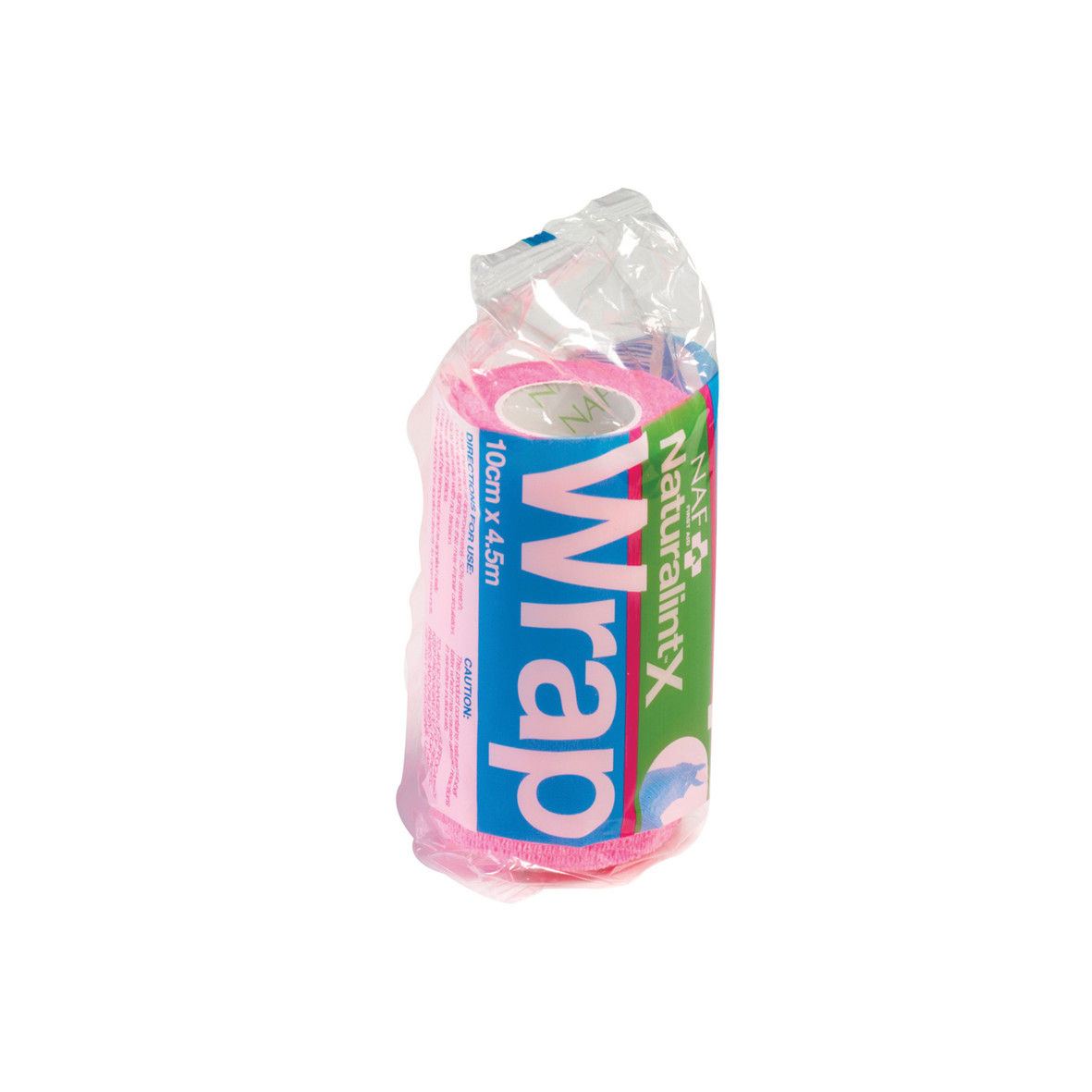
N.A.F: NaturalintX Dressing & NaturalintX Wrap

The company says: This softly cushioned dressing protects and insulates the leg to support minor wound management. The highly absorbent cotton padding is encased in a tubular non-woven casing to provide a low adherent protective dressing. 500g. RRP: £9.99.
A cohesive, elasticated support bandage, specifically designed to hold wound dressings carefully in place. When applied correctly, at approximately 50% stretch, the wrap will effectively secure the dressing neatly and comfortably over the wound. Efficient and easy to use. RRP: £1.99 each or £23.88 for a box of 12. www.naf-
Our tester, Maria Phillips, says: I found the dressing to be excellent for cushioning the area around small bumps and wounds on the lower legs, so it had a dual purpose in that it not only provided support during the healing process, it also prevented dirt and foreign bodies from entering the wound, therefore keeping the area clean and dry and stopping the risk of infection.
It also is very useful for application over foot poultices. The veterinary wrap was essential to be used in conjunction with the above as it secured the dressing and prevented it from slipping or rubbing as well as keeping the dressing clean for longer. It’s very adhesive so can be used on the lower leg and is also ideal around the hoof. The wrap went a long way and was very easy to use. Essential in the first aid kit for use in the treatment of domestic or farm animals, large or small and it is for that reason I am scoring them as I have.

HIGHLY RECOMMENDED
GroomAway – Aloe Vera Gel
The company says:
Made from the best natural ingredients, which helps maintain healthy skin and aids natural recovery from minor grazes and sunburn. Useful for almost any skin condition that needs soothing and astringing. 200ml. RRP:
Our tester, Chris Grant, says: This gel comes in a handy sized little pot, which was very useful for keeping in the grooming kit bag and on the ‘lotions and potions’ shelf at home. With a lengthy test time I have been able to use the gel on a number of occasions and found it to be soothing and kind on the variety of cuts and sores that it was used on. As well as testing on the ponies, I even on occasion used it on my own hands finding it to be beneficial. I found that only a couple of applications were required thus reducing the healing time of any ailments. Also great as a moisturiser, helping to soften the hard skin around any cuts and preventing them from drying out. The gel can be used liberally, making it great value as the pot lasts plenty of time.  


VERY HIGHLY RECOMMENDED
Robinson Animal Healthcare – Activ Scrub
The company says: An anti-bacterial cleansing wash ideal for the management of common winter skin problems. Mild and gentle, it is perfect for removing scabs and debris caused by mud fever and rain scald, and used regularly it can effectively cleanse areas susceptible to mud fever, remembering to always thoroughly dry the legs afterwards.500 ml sized pump cap bottle. RRP: around £10. www.robinsonanimalhealthcare.com
Our tester, Pam Harrison, says: This is very easy to use – a BIG plus for me as I’m always short of time – and it’s also impossible to spill it thanks to the pump dispenser, which is helpful if a horse is fidgety. Very effective at cleansing dirt and skin debris and it’s easy to dry legs afterwards. Clearly doesn’t sting and used in warm water is very well tolerated on the mud-related and other minor wounds we had during the test period.


VERY HIGHLY RECOMMENDED
N.A.F - NaturalintX Hoof Poultice & NaturalintX Wrap
The company says:
The Hoof Poultice has been designed to comfortably fit your horse’s hoof, reducing preparation time and enabling ease of application. May be applied in three different ways depending on the wound to be dressed, either apply as a hot, cold or dry hoof poultice and hold in place with a NaturalintX Wrap. RRP: £6.99 each or £69.90 for a box of 10.
The Wrap is a cohesive, elasticated support bandage, purpose designed to hold wound dressings carefully in place. When applied correctly at approximately 50% stretch it will effectively secure the dressing neatly and comfortably over the wound. Efficient and easy to use. RRP: £1.99 each or £23.88 for a box of 12. www.naf-equine.eu/uk
Our tester, Caroline Powell, says: Life would be so much more difficult if this hoof poultice didn't exist!!  It aids natural healing with a built in mild antiseptic (Boric Acid) and a drawing agent Tragacanth. Can be cut to size to fit your horse’s injury and can be used hot, cold or dry... A little gem for every first aid kit! Top tip - Remember to always make sure the plastic is facing away from the horse ☺.
Now onto another wonder of the horse world... this fantastic wrap, which is perfect for using on top of a foot poultice. Personally, I always worry about putting this type of stretch material on legs as put on too tight, it can cause some serious issues unless the correct padding is applied. However, this is just perfect for foot poulticing.  Sticks to itself and now can be colour coordinated to suit your horse’s wardrobe!


The full feature of the Big Test of Healthcare Essentials was published in the March issue of Equine. You can buy a single issue of Equine, or take out an annual (11 issue) subscription securely online from www.theequinestore.co.uk